Flying Squirrels

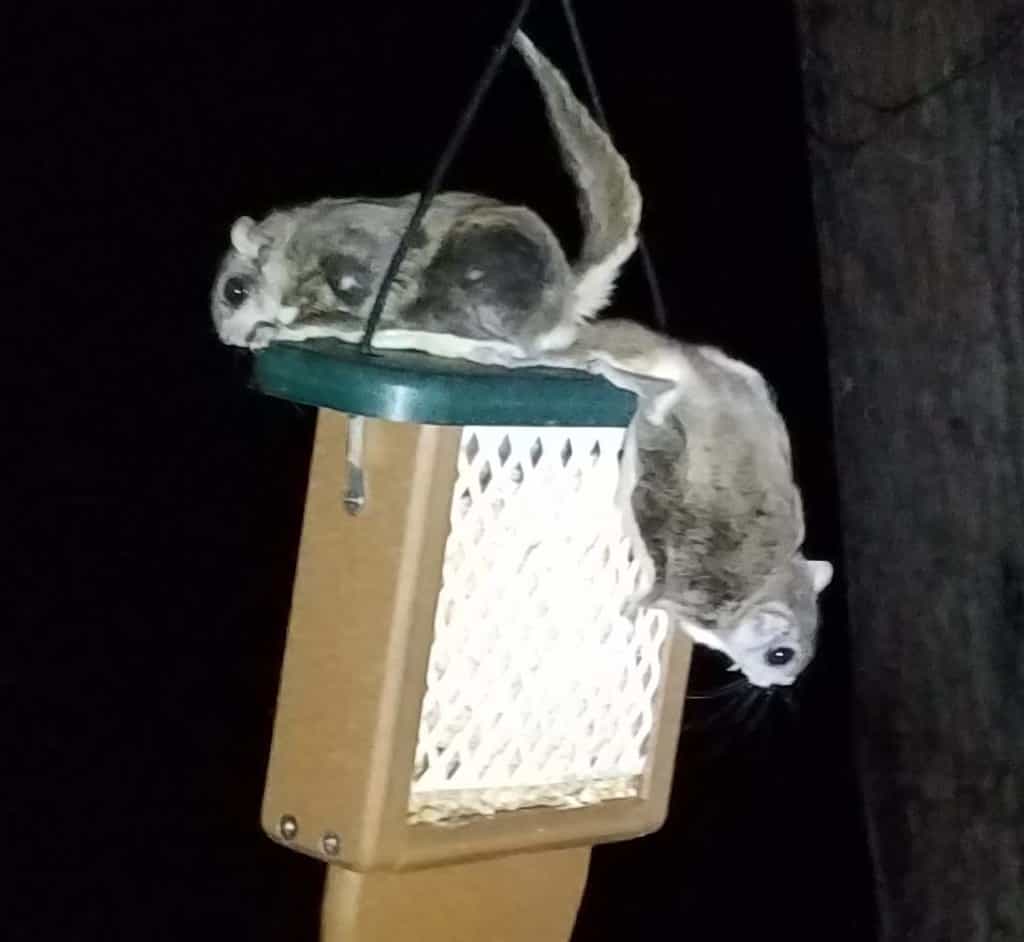
These two characters managed to bypass the defenses I have successfully setup to discourage the most creative squirrels.  Here are a couple of the smallest squirrels, the nocturnal flying squirrels.  Per Mass Audubon, northern and southern flying squirrels inhabit Massachusetts, but they only emerge at night. They average about 10 to 15 inches long and have flat tails for gliding through the air.

Photo by Ron Gemma
Similar Posts

  • |

    Late Summer Visitors

    Here are a few recent sightings of Monarch Butterflies along with a Tiger Swallowtail, Fritillary and Hummingbird Moth. All enjoying some nectar from Butterfly Bush (Buddleia davidii) which can aggressively reseed so best to keep an eye on where you plant this butterfly attracting shrub. These were all seen in late summer – August and…

  • Marsh Marigold

    Marsh Marigold noted at Emmet Conservation Land May 11, 2024 during the trust annual Bird Walk. Marsh Marigold (Caltha palustris) is notable for its bright yellow spring bloom and its high tolerance for shade. The glossy, deep green leaves look good all season long, and the early bloom can give wet spots and pondsides a…

  • Pale Green Critters

    Pale Green Assassin Bug Photo taken May 15, 2021 on local flora. Description: Pale green or yellowish insect with a thin body. Adults have dark wings, males have a dark head as well. Nymphs lack wings and thorax spines. Adults can fly but rarely do so. Reproduction: In July adults lay eggs. The eggs are laid in…

  • Virginia Virgin’s-bower

    Virgin’s-bower (Clematis virginiana) growing at Grey Fox Conservation land, photo taken on 9/24/22, near the banks of Stony Brook in Westford. According to Native Plant Trust’s Go Botany, this beautiful native is the most common clematis in New England. The Cherokee made an infusion of virgin’s-bower with milkweed (Asclepias) to treat backache, as well as…