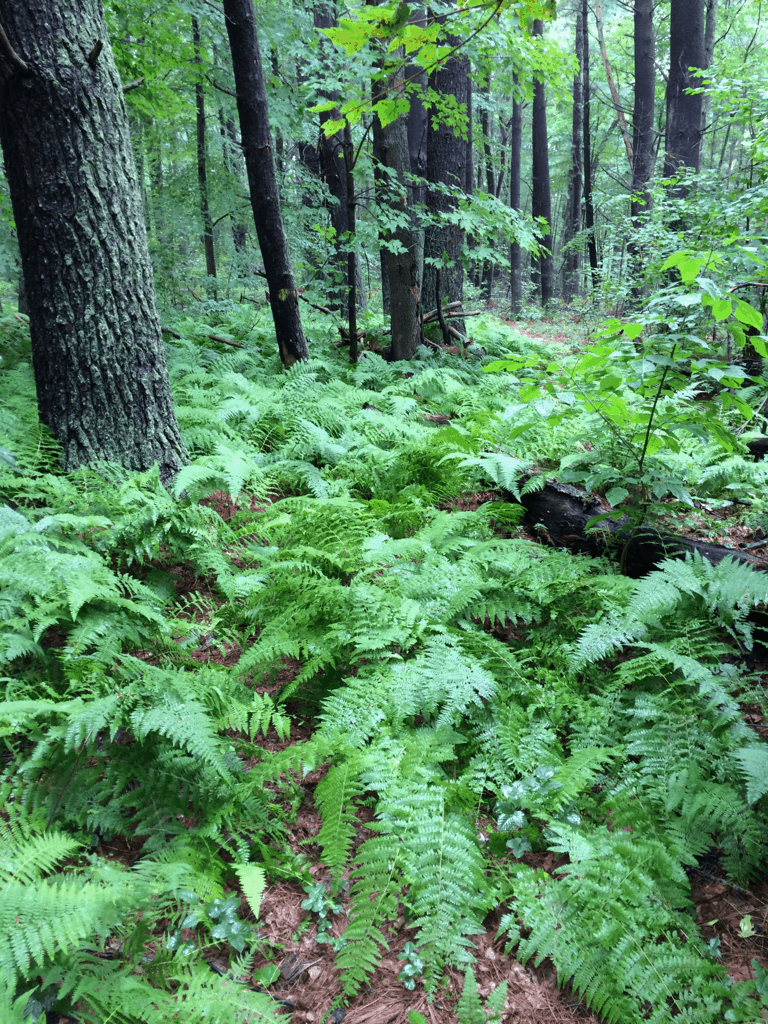
What good is a forest? How do I count the ways? We know by experience, especially during the past year, how soothing and peaceful it feels to walk in a forest. We read that trees release chemicals into the air that help them to communicate with each other, but which also seem to be soothing to humans. We also know that trees produce most of the food our wildlife depends on to survive. We know that most birds in the United States feed themselves and their young on the 897 species of caterpillars hosted by oak trees. And at least 100 species of North American birds and mammals feed on acorns. White and Red Oak are perhaps the most important tree in the forest for wildlife. Other species of trees and shrubs found in a forest also provide important nourishment for different birds and other animals.
There is new recognition at the national level that forests are an essential element in solving our climate crisis. We must bring our carbon output in the atmosphere to net zero. This means bringing our carbon emissions from housing, transportation and manufacturing way down, and bringing our carbon capture and sequestration way up. The only way we know of to capture carbon in a large-scale manner, is through leaving existing trees standing, a method known as “proforestation”. The State of Massachusetts has passed a climate protection bill, called “The Decarbonization Roadmap to 2050” , which includes forest protection as an important component in taking carbon out of the atmosphere.
National Geographic in their online blog states, “Deforestation is depleting Earth’s supply of carbon sinks. As a result, the amount of carbon in the atmosphere is rising.” The World Resources Institute website states, ” Forests absorb twice as much carbon from the atmosphere as they emit. Protecting standing forests is critical for climate mitigation. Overall, the data show that keeping existing forests standing remains our best hope for maintaining the vast amount of carbon that forests store….protecting primary and mature secondary forests today is most important for curbing climate change.”
Dr. William Moomaw, Professor Emeritus of International Environmental Policy at Tufts University, is the lead author of five Intergovernmental Panel on Climate Reports (IPCC). He is currently researching natural solutions to climate change. His recent article in the publication Frontiers in Forests and Global Change, June, 2019 is titled “Intact Forests in the United States: Proforestation Mitigates Climate Change and Serves the Greatest Good.” Prof. Moomaw states, “Intact forests–largely free from human intervention except primarily for trails and hazard removals–are the most…biodiverse terrestrial ecosystems….Proforestation serves the greatest public good by maximizing co-benefits such as nature-based biological carbon sequestration and unparalleled ecosystem services such as biodiversity enhancement, water and air quality, flood and erosion control, public health benefits, low impact recreation, and scenic beauty….Northeast secondary forests have the potential to increase biological sequestration between 2.3 and 4.2 fold…..proforestation provides the most effective solution to dual global crises–climate change and biodiversity loss….Proforestation is a very low-cost option for increasing carbon sequestration that does not require additional land beyond what is already forested.”
Westford is committed to find ways that we can meet the goals of the State and is writing its own Roadmap to Net Zero (See the website of the Town’s Clean Energy and Sustainability Committee). Keeping our forests standing should be a primary goal of the plan.
Many thanks to all flora and fauna reporters for the month of September. Please send reports by October 26, for inclusion in next month’s column. You can write me at 7A Old Colony Drive, call me at 692-3907, or e-mail me at mariancharman@gmail.com.
Late July and August Reports:
Ginger Dries, Sherwood Drive. July 19, cardinals, two nestings of house wrens , in two of the three boxes, lots of grackles and other blackbirds, a red fox catching squirrels, bobcat, deer. August 4, weasel in yard. Doe and fawn in the yard. A third nesting of one of the wren pairs. One day the box was down and feathers were all over the place–weasel?
Kate Hollister, Vine Brook Rd. August report: Since I removed my bird feeders, noticed a bluebird, goldfinches, and hummingbirds. A spotted turtle crossed our lawn to get to nearby wetlands. Lots of insects, particularly a hummingbird moth, yellow tiger swallowtail, bumble and other bees, monarch butterflies and caterpillars, a female common whitetail dragonfly, a juvenile blue darner dragonfly, and lots of other damselflies and dragonflies.” [Kate sent some nice photos of dragonflies-MH]
Diane and Bill Duane, Howard Rd. August 25, American Lady butterfly on our butterfly bush [Bill took a beautiful photo-MH].While paddling on Stony Brook we saw two monarchs, three cedar waxwings, 1 spotted sandpiper near East Boston Camps, twelve wood ducks, two beautiful egrets, three great blue herons, pair of mute swans (one was hissing as we paddled by their nest)–We tried to stay as far away as possible! Two beaver lodge and at least two beavers, fourteen Canada geese, multitudes of dragon and damselflies – especially bluets.
September Reports:
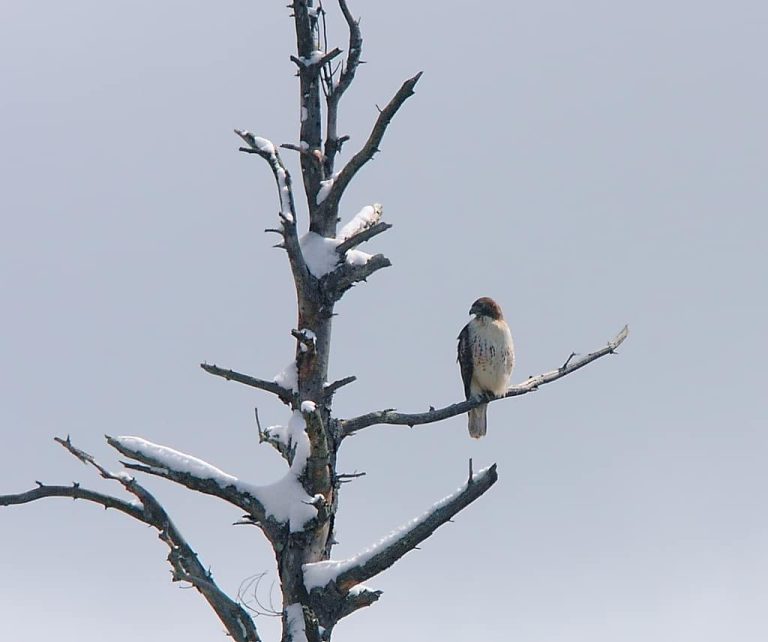
Marilyn Day, Graniteville Rd. September 3, noisy hawks around all summer [Marilyn sent a good photo of two young red-tailed hawks in her Norway Spruce].
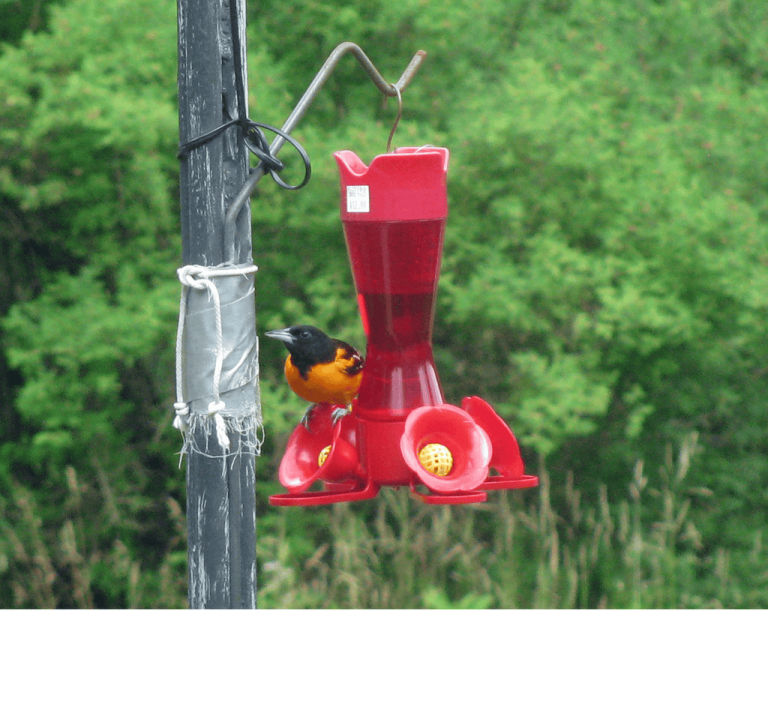
Marian/Bill Harman, Old Colony Drive. September 4, three monarch butterflies seen. September 12- 70’s, sunny, beautiful. four chickadees, two titmice, 2 nuthatches, 6 goldfinches, one downy woodpecker, one hairy woodpecker–no hummingbirds for the first time. September 13, a hummingbird flew in–it was very timid and nervous–quite obviously a pass-through migrant. September 14, sunny. A confidant hummingbird at feeder. September 15, 72 degrees, cloudy. Two relaxed hummingbirds at feeder. September 17- 70’s. One relaxed hummingbird tanking up on sugar water. This is the last one we saw this season. September 26, neighbor sent a photo of a young red-tailed hawk on her roof.
Rosemarie Koester, Providence Rd. September report: at the bird feeder, doves, blue jays, tufted titmouse, chickadees. Wren on deck checking out the plants. Busy female downy woodpecker on deck and feeder, and pecking away at the house. Red-bellied woodpecker, lots of house finches and goldfinches. Hawks overhead, birds fussing and chasing. Pair of cardinals with one juvenile. Hummingbirds, red-winged blackbirds and rose-breasted grosbeak not around any more. Three deer spotted at the back of the yard, bunnies around–one tried to dig under our shed. Chipmunks galore, digging holes. Neighbor spotted a coyote in back of the house. Heard a pack of coyotes making a screeching racket on Sept. 24. Frog crossing the street after the rain, bees, wasps at gardens–happy to see! Interesting mushrooms in the woods, lots of bittersweet.
Marian Harman is a member of the Westford Conservation Trust, a non-profit conservation organization, whose purpose is the protection of Westford’s open spaces and trails. The Trust welcomes new members and volunteers. Check out the Trust’s website at westfordconservationtrust.org or visit us on Facebook.
Our new for 2025 Invasive Plants of Westford Massachusetts guide is now available in PDF format here on the website. Invasive plants are non-native species that spread aggressively and alter ecosystems such as forests and wetlands. Invasives do not become “naturalized” and get along with native plants, but form monocultures inhospitable to native plants. The…
The 2018 weather has been the most extreme many of us in the United States and even in Europe have ever experienced. In fact, instead of global warming, the climate change we are seeing is being called by scientists “global weirding”. It is thought that the extremes of cold and snow we experienced this winter…
This past year, 2024, was warmer than ever before. This change in climate has affected both flora and fauna, and has us worried for their welfare. January saw several small snowstorms of 5 and 8”, but generally there was little snow. At the end of January the temperature was 50 degrees and cloudy for many…
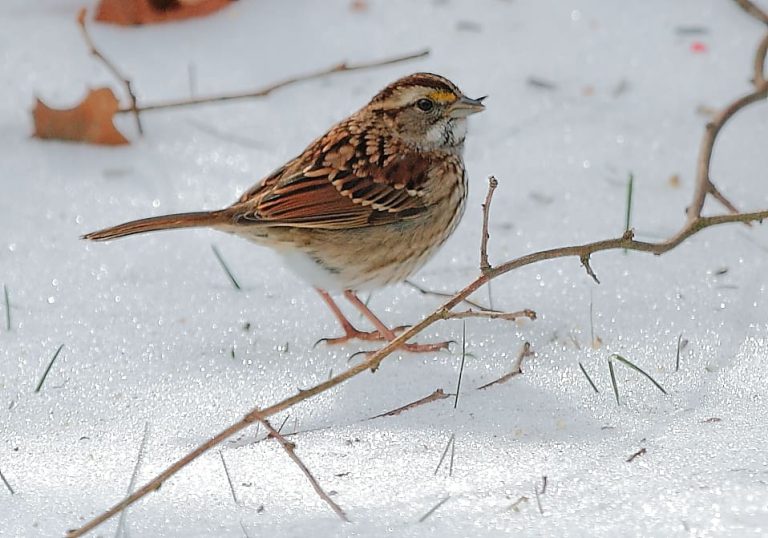
Winter has finally arrived. When the snow flies so do the birds, arriving at our feeders in larger numbers. We get many different little brown birds that on quick inspection we may lump together as “sparrows”. But on closer inspection, we see that they are house sparrows, female house finches, Carolina wrens, fox sparrows, song…
On those frigid days of winter when the wind is high and the temperatures plunge below zero on some nights, I’m sure you feel as sorry for the birds as I do. How do they stay warm in winter? It seems something of a miracle when we see them at our feeders in the morning….
WCT Annual Meeting – Wednesday, November 13th, 2024 at 7 pm – PCA (Parish Center for the Arts) , Westford Center Members and friends are invited to join us for our our Annual Trust Meeting. We will have a brief Trust business meeting followed by our guest speaker. Light refreshments will be served. Hope you…
Welcome to Westford Conservation Trust’s Development and Testing Site
We are testing ideas for a refresh of our website here. If you want to see current news and events, join us as a member, or see other information on our live website, please visit https://westfordconservationtrust.org