Club Moss by Marian Harman
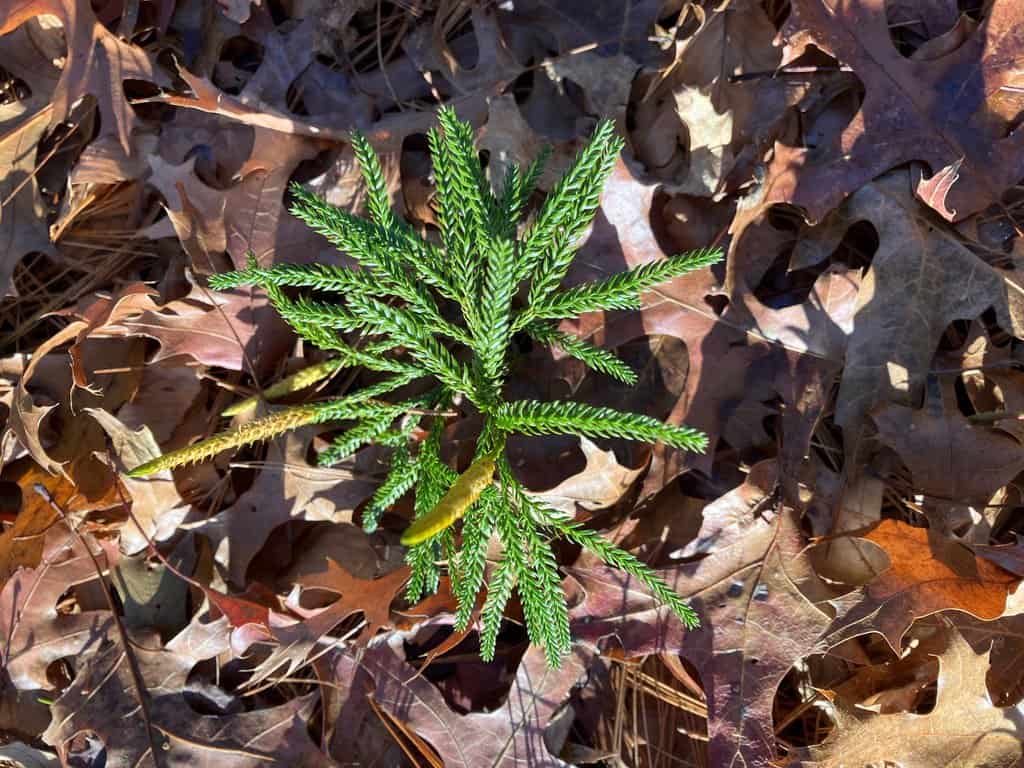
In late fall and early winter, a walk in the woods still reveals some lovely green plants. One of New England’s prettiest evergreens is most noticeable at this time on the forest floor; the tiny tree-like plants called clubmosses. In our area, there are five species of clubmosses: ground pine (also called princess pine), shining clubmoss, bristly clubmoss, ground cedar and staghorn clubmoss. The most common in the oak/pine forests of Westford is ground pine. This plant, like all the clubmosses is ancient in origin. Clubmosses, vascular, non-flowering plants, appeared on earth in the Devonian and Carboniferous periods, 400 to 200 million years ago. Clubmosses were towering trees in those periods, antecedents of our present-day flowering plants and trees.
Ground pine is a clubmoss native to North America, growing in the temperate forests from Georgia to Canada. This plant is evergreen and grows not much more than 6 “ tall. It has short leaves in the shape of needles. It reproduces in two ways: spreading vegetatively underground by runners which can form large clone patches on the forest floor, or by producing spores in the fall. The spores are contained in capsules on its strobili, which appear at the ends of branches. The yellow spores are contained within these capsules. The spores are released as a fine powder. When spores are released and carried by the wind to the ground, they produce gametophytes (tiny plants). Gametophytes produce male and female reproductive cells called gametes (some produce eggs and some produce sperm). Sperm cells swim towards egg cells in the wet soil of the forest for fertilization. I was privileged to watch this process under a microscope during a fern/clubmoss class at Garden in the Woods in Framingham. Both clubmosses and ferns reproduce in the same manner. Plants and animals are not so different, it seems! The entire growth cycle of the plant, one generation, from spore to spore, can take up to twenty years.
It is not recommended to dig up these plants to be used in terrariums. Remember that they are of ancient origin, and take twenty years to grow to maturity. They need a very special environment to survive, in association with a fungus that grows only in pine woods. We should respect our elders!
Many thanks to our flora and fauna reporters for the month of November. Please send reports by December 31 for next month’s article. Please send your sightings to me at mariancharman@gmail.com.
November Reports:
Marian/Bill Harman, Old Colony Drive. November 2, 36 degrees, sunny, first frost. Pileated woodpecker flyby, red-tailed hawk circling overhead and then gliding south. At the feeders: four blue jays, one red-bellied woodpecker, one white-breasted nuthatch, one house sparrow, two chickadees. November 3, 50’s, cloudy—a quiet, gray day. Walk to the beaver dam: most leaves are off the trees now, so we have a good view of the pond. Chickadees, nuthatches, downy woodpecker, hairy woodpecker, red-bellied woodpecker, a quiet little song sparrow, Carolina wren. Flying all around are adult wooly aphids, those small, blue flying bugs seen in the fall– also called “fluffy butts”.
I see twelve Tamarack (or Larch) trees at the end of the pond, with their golden needles very visible now. It means this area is a bog—first time I’ve noticed more than the tallest one. As I walk, I’m inspired to write a free verse poem.
Mid-November
Larch trees in the bog
Are hit by the lowering sun,
And glow like golden torches.
Wind drives dark cats’ paws across the pond.
A crow flies overhead,
Sounding its harsh call.
I am revived.
November 6, 50’s, a walk to Otter Point: Many shrubs have spring buds appearing at the tips of branches. A big surprise: skunk cabbage flowers are coming up in the swamp (It has been so warm), a cormorant gliding across the pond, and diving for fish. Very quiet, only a few chickadees heard. A large pile of scat with beetle shells in it and raked over with pine needles (?). Very white, lacy-edged bracket fungus on a dead oak tree. November 11, 40’s, light wind, sunny, beautiful fall day. A walk to the beaver dam: chickadees, titmice, downy woodpecker, blue jay, crow. November 21, 30’s, sunny. First junco seen– It was sitting on the table on our deck. November 22, 50’s, first patches of snow on the ground. At feeders: chickadees, downy woodpecker, cardinal, two titmice, six goldfinches. November 24, 40’s, sunny. At feeder, blue jays, cardinal pair, two chickadees, two house finches. In late afternoon, one juvenile deer cautiously nibbling on the ground in back yard. November 27, 36 degrees, sunny, breezy. At feeder: three juncos, downy woodpecker three goldfinches, two chickadees, a titmouse. November 28, 30 degrees, sunny. At feeder: Four blue jays, juncos, red-bellied woodpecker.
Tim Spera, November 2, a bald eagle perched in a tree at the intersection of Hildreth St and Parkhurst Drive (Tim sent a photo of an adult bald eagle-MH).
Nancy Eberiel, Depot St. November 11, five blue jays at the feeder most of the day, keeping cardinals and all smaller birds away.
Tom Ennis, Almeria Drive. November 18, bobcat family at the house (parent and several juveniles- Tom sent wildlife cam photo).
Rosemarie Koester, Providence Rd. November 27, We put our feeders back out:
Blue jays
Few cardinals when blue jays are not around.
Tufted titmouse
Junco.
Sparrows
Red bellied woodpecker
Downy. – pecking at our house!
Other
Deer ran thru yard.
Turkeys
squirrels
Two deer crossing Depot Rd while I was driving. Slowed down.
Marian Harman is a member of the Westford Conservation Trust, a non-profit conservation organization, whose purpose is the preservation of Westford’s open spaces and trails. The Trust welcomes new members and volunteers. Check out our website at westfordconservationtrust.org, and visit us on Facebook.
Do you frequent trails in town? Explore new areas beyond the same old trails! Become a frequent hiker! The Westford Conservation Trust now has a recognition program for dedicated hikers like you. At the urging of Trust member Andy Mallio, two levels of recognition are supported. If you visit every one of the hiking areas…
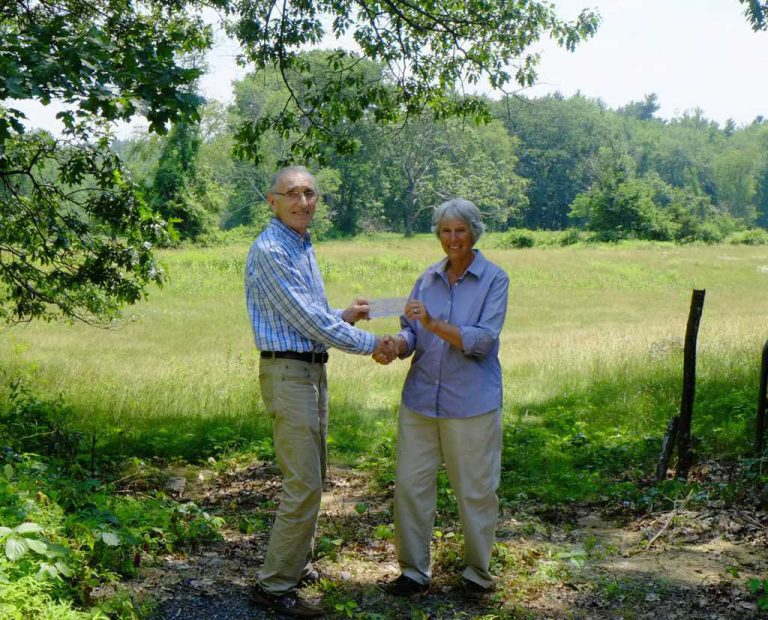
WORCESTER, Mass., Jan. 10, 2017 /PRNewswire/ — The Westford Conservation Trust has been selected as the first beneficiary of the new Coghlin Companies Caring Corporate Citizen (“5C”) program. The program was formally launched in 2016 to further demonstrate Coghlin Companies’ commitment toward encouraging volunteerism and providing financial support to community service and philanthropic organizations that are important to its loyal team…
Westford Conservation Trust voted to donate $8,000 to the Campaign to Conserve Salt Box Farm in support of the protection of open space in Westford. Please consider donating today to help with the protection and conservation of this very special property! Salt Box Farm The 52-acre Salt Box Farm on Hildreth Street in Westford Center…
If you are trying to tread lightly on the earth, and reduce your carbon footprint, one of the most effective steps you can take is to eliminate palm oil from your life. Palm oil is cheap to produce and is shelf-stable, so is the oil of choice for many companies. But, palm oil production has…
Farmland is disappearing in Massachusetts. We are losing agricultural lands and farming opportunities at an alarming rate. To try to stem the tide of farmland loss, the Mass Department of Agricultural Resources (MDAR) established the Agricultural Preservation Restriction (APR) program in 1979. It was a first-in-the-nation model for many other states. The MDAR website states,…
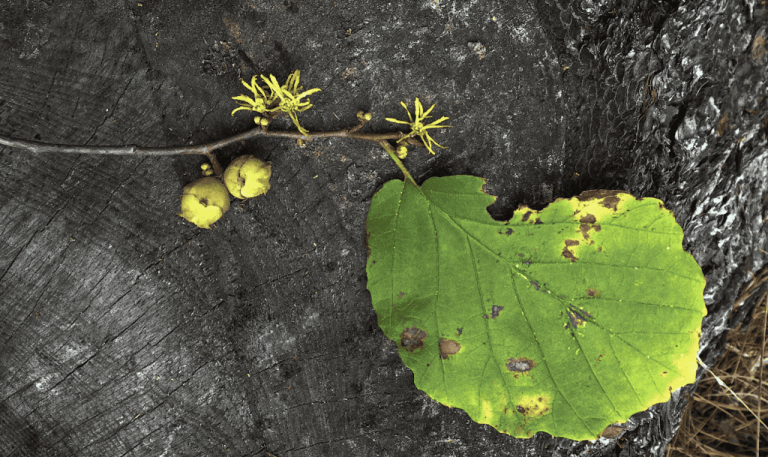
The Last Flower of Fall When walking on my favorite trail recently, I noticed the last flowers of fall blooming in profusion. The Common Witch-hazel shrubs were sporting their yellow leaves, and their surprising bursts of yellow flowers. I always seem to forget to look for them in October, and am always happily surprised to…
Welcome to Westford Conservation Trust’s Development and Testing Site
We are testing ideas for a refresh of our website here. If you want to see current news and events, join us as a member, or see other information on our live website, please visit https://westfordconservationtrust.org